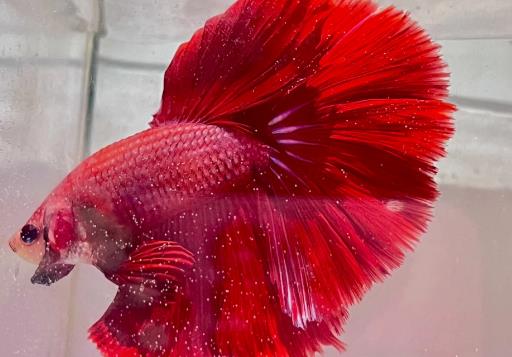
Selecting optimal water for betta fish requires considering multiple factors including water quality, temperature, pH level, hardness, and dissolved oxygen to ensure their healthy growth and vibrant coloration. Below are detailed recommendations:
1. Water Quality Requirements
Cleanliness
Betta fish are sensitive to water quality and require clean, unpolluted water.
Avoid tap water containing chlorine, heavy metals, or other harmful substances. If using tap water, dechlorinate it beforehand (e.g., via sun exposure or water conditioners) .
Filtered purified water, distilled water, or water treated with reverse osmosis (RO) systems is recommended .
Dissolved Oxygen (DO)
While bettas can survive briefly in low-oxygen environments, prolonged oxygen deprivation leads to health issues .
Maintain sufficient dissolved oxygen by using air pumps or performing regular water changes .
2. Temperature Control
Ideal Range
24°C–28°C is the optimal temperature range for bettas, where they remain most active and maintain robust metabolism .
Stability
Avoid sudden temperature fluctuations. Use an aquarium heater to keep water temperature constant .
Seasonal Adjustments
Provide cooling in summer and heating in winter to keep temperatures within the ideal range.
3. pH Level
Ideal Range
6.5–7.5 (slightly acidic to neutral water) .
Adjustment Methods
Test regularly with pH test kits .
If pH is too high: Add acidic substances (e.g., citric acid) or use softening resins .
If pH is too low: Add alkaline substances (e.g., sodium bicarbonate) or mineral-rich materials like crushed coral .
4. Hardness Control
Ideal Range
General Hardness (GH): 4–8°dH
Carbonate Hardness (KH/dKH): 3–5°dH
Adjustment Methods
Test with hardness test kits .
For excessive hardness: Dilute with distilled water or use softening resins .
For insufficient hardness: Add mineral salts or hardness-increasing materials like crushed coral .
5. Water Changes & Maintenance
Frequency
Change 1/3 to 1/2 of the water weekly. Adjust frequency based on water quality and tank size .
Avoid complete water changes to prevent stressing bettas .
Procedure
Use a siphon or gravel vacuum to remove waste and uneaten food from the tank bottom .
Add new water slowly, ensuring it matches the tank’s temperature .
Treat new water with conditioners (e.g., dechlorinators) .
Filtration Systems
Use external or internal filters to maintain water clarity .
Clean filter pads and media regularly to prevent clogging .
6. Additional Considerations
Avoid Harmful Chemicals
Never add disinfectants, cleaners, or other chemicals to the tank, as they can harm bettas .
Decorations
Choose non-toxic decorations with smooth edges to prevent injuries .
Avoid metal decorations, which may rust and contaminate water .
Monitor Betta Behavior
Regularly observe bettas’ swimming patterns, feeding habits, and color changes to detect and address water quality issues early .