
Betta fish—especially males—are naturally aggressive, so choosing tank mates requires caution to avoid conflicts and injuries. Below are recommended compatible tank mates and detailed guidelines to help you create a harmonious aquatic environment:
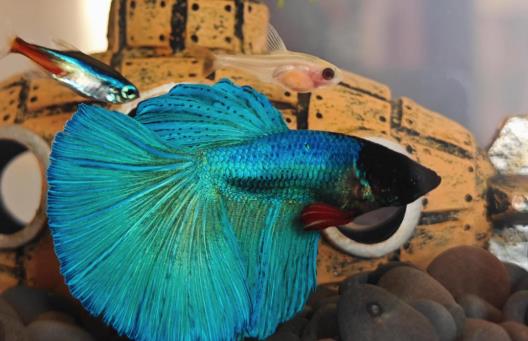
I. Top Recommended Tank Mates
Small Tetras (e.g., Neon Tetras, Cardinal Tetras)
Traits: Tiny (3–5 cm), peaceful temperament, and agile swimmers.
Advantages:
Schooling behavior diverts the betta’s attention, reducing aggressive tendencies.
Vibrant colors (e.g., neon tetras’ blue-green stripes) create visual contrast with bettas, enhancing tank appeal.
Considerations:
Keep a school of at least 6 to prevent single tetras from being chased.
Use a tank of 30 cm or larger to provide ample hiding spaces.
Otocinclus Catfish (e.g., Dwarf Otocinclus, Golden Oto)
Traits: Flat-bodied (5–7 cm), gentle nature, and algae-eating specialists.
Advantages:
Do not compete with bettas for food or territory; they clean algae off tank walls.
Slow-moving, so they won’t provoke bettas.
Considerations:
Ensure sufficient algae in the tank or supplement with algae wafers.
Avoid mixing with large algae eaters (e.g., plecos).
Small Shrimp (e.g., Cherry Shrimp, Amano Shrimp)
Traits: Minuscule (1–2 cm), shy demeanor, and high reproductive rate.
Advantages:
Shrimp colonies clean leftover food and debris from the tank bottom, maintaining water quality.
Transparent or bright colors (e.g., cherry shrimp’s pink hue) add visual interest.
Considerations:
Provide dense aquatic plants or hiding spots to protect shrimp fry from betta predation.
Avoid aggressive shrimp/crabs (e.g., crayfish).
Small Snails (e.g., Mystery Snails, Apple Snails)
Traits: Round-shaped (2–3 cm), peaceful, and feed on algae and detritus.
Advantages:
Clean algae from glass and decorations, reducing manual cleaning frequency.
Slow-moving, so they won’t disturb bettas.
Considerations:
Control snail population to prevent overbreeding and filter clogs.
Avoid Assassin Snails (they prey on other snails).
Other Peaceful Fish (e.g., Guppies, Zebra Danios)
Traits: Slender (4–6 cm), active, and highly adaptable.
Advantages:
Fast swimmers that can evade betta attacks.
Colorful appearances (e.g., guppies’ vivid fins) complement bettas.
Considerations:
Choose individuals of similar size to prevent bettas from bullying smaller fish.
Use a spacious tank to allow vertical zoning (e.g., tetras in the upper layer, guppies in the middle).
II. Core Principles for Successful Cohabitation
Adequate Space
Use a tank of at least 30 cm to provide enough activity area for all inhabitants.
Add hiding spots (e.g., plants, driftwood, ceramic caves) to minimize conflicts.
Temperament Compatibility
Avoid aggressive fish (e.g., tiger barbs, cichlids) or species with significant size differences.
Prioritize peaceful, agile tank mates that won’t trigger the betta’s territorial instincts.
Water Parameter Compatibility
Ensure all species share similar requirements: water temperature (25–28°C), pH level (6.5–7.5), and soft water hardness.
Regularly test water quality to prevent ammonia and nitrite spikes.
Observation and Adjustment
Monitor the betta’s behavior closely during the initial cohabitation period. Isolate immediately if frequent chasing or fin tearing occurs.
Introduce new tank mates gradually to avoid sudden environmental changes.
III. Tank Mates to Avoid
Other male bettas: Severe fights may occur, leading to death.
Large fish (e.g., arowanas, Oscar fish): May prey on bettas or compete for territory.
Aggressive shrimp (e.g., crayfish): Can pinch and injure betta fins.
Bottom-dwelling fish (e.g., corydoras): May be mistaken for food or disturbed by bettas during rest.