
The lifespan of betta fish typically ranges from 2 to 5 years, and in most cases, it is approximately 3 years. Their age can be determined through the following methods:
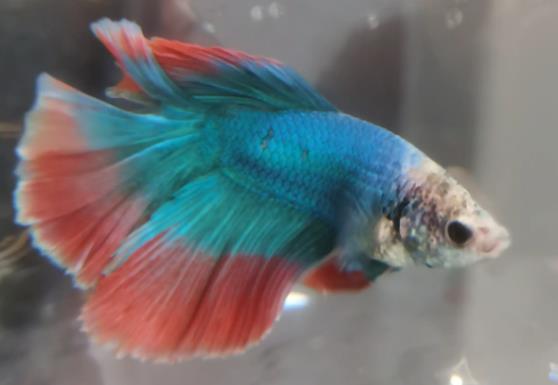
I. Determining Age Through External Characteristics
Body Length
Adult Betta Fish: The body length is usually around 7.5 cm (3 inches). If the body length is less than this, the fish may still be in the growth stage.
Adolescent Betta Fish: The body length is about 4.5 cm, and they are in a stage of rapid development.
Fin Condition
Adult Betta Fish: Fins are complete and flowing, which is particularly obvious in male betta fish.
Adolescent Betta Fish: Fins are small and not fully expanded.
Elderly Betta Fish: Fins may be incomplete or torn due to wear and tear or aging.
Body Color and Luster
Young Betta Fish: Body color is bright, with high luster.
Middle-Aged Betta Fish: The body surface has slight fading, and the luster decreases.
Elderly Betta Fish: Body color is pale, and the scales lose their luster.
Body Shape
Young Betta Fish: The back is straight, and the body shape is well-proportioned.
Elderly Betta Fish: The back is arched, showing a hunchback posture, which may be accompanied by emaciation.
Eye Condition
Elderly Betta Fish: Eyes may develop white spots (similar to cataracts), which is a common sign of aging.
II. Determining Age Through Behavior and Vitality
Activity Level
Young Betta Fish: Energetic and active swimmers, often exploring around the fish tank.
Elderly Betta Fish: Activity decreases; they like to hide behind plants or decorations and swim slowly.
Feeding Behavior
Young Betta Fish: Feed actively with quick reactions.
Elderly Betta Fish: Feed passively, may miss food, and need multiple attempts to catch food.
Desire to Fight
Young Betta Fish: Have a strong sense of territory and show intense aggression towards conspecifics or their reflections in mirrors.
Elderly Betta Fish: The desire to fight decreases, and they have slow reactions to stimuli.
III. Relationship Between Age and Lifespan
Lifespan Range
The lifespan of betta fish is affected by factors such as genetics, rearing environment, and water quality management, and it usually ranges from 2 to 5 years.
Under ideal conditions (such as clean water, stable temperature, and sufficient food), some betta fish can live up to 4 to 5 years, and there are even records showing that the longest lifespan can reach 8 years.
The average lifespan of wild betta fish is shorter, about 2 years.
Age and Ornamental Value
Betta fish have the brightest body color and the best ornamental value when they are around 1 year old.
After 2 years old, they start to age, their body color fades, their vitality decreases, and their ornamental value gradually declines.
IV. Suggestions for Extending the Lifespan of Betta Fish
Provide a Suitable Environment: Maintain the water temperature between 24 and 28°C, use a filter to keep the water clean, and change the water regularly (1/3 to 1/2 of the water every week).
Feed Scientifically: Choose specialized feed or live bait (such as brine shrimp, bloodworms), and avoid overfeeding, which may lead to obesity or water quality deterioration.
Reduce Stress: Avoid moving the fish tank frequently or scaring the betta fish, and provide hiding places (such as aquatic plants, driftwood) to reduce stress.
Prevent Diseases: Regularly observe the behavior and body surface of betta fish, and isolate and treat them in a timely manner if abnormalities are found to avoid the spread of diseases.